Hanouts and corner shops
Credit written down. Money coming back.
Amplify Hanout puts the kridi (credit) book on your phone, with a polite WhatsApp reminder in one tap. And if you want: the till, stock, suppliers and neighbourhood orders. In Arabic or French, even without internet.
- 1phone: yours, nothing to buy
- 2languages: Arabic and French
- 10modules, you choose which
The counter
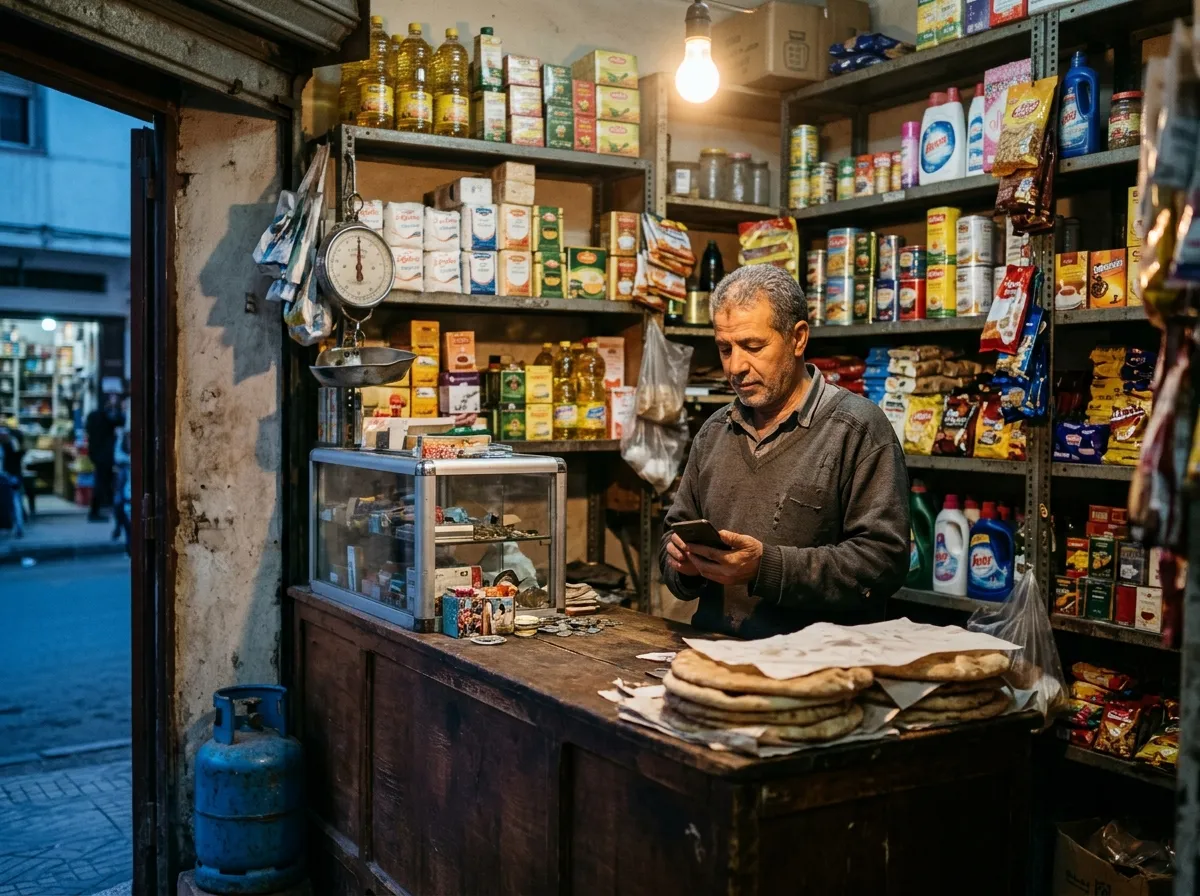
The whole neighbourhood comes through here.
Today
- A credit book full of crossings-out, and pages nobody reads again.
- “I'll pay you next week.” Three months later, you no longer dare to ask.
- In the evening, the till never adds up, and nobody knows why.
- The out-of-date yoghurt found at the back of the fridge.
- The wholesaler says you owe him 1,800 DH. You thought 1,200.
Avec Amplify
- Every client has an account, the total is always right.
- A polite WhatsApp reminder in one tap, with the details of their account.
- The day's till, counted and closed in two minutes.
- Expiry dates coming up, before it's too late.
- What you owe each supplier, line by line.
Your shop. Your way.
Every shop is different. Start with the credit book alone, or take everything. Pick a start, or tap the modules yourself.
You keep your way of selling. The book moves to the phone, nothing else changes.
Every sale written down, the change worked out, the day's total without any sums.
Stock, suppliers, top-ups, the team and neighbourhood orders. All in one place.
10 modules switched on. Change it whenever you like, in the settings.
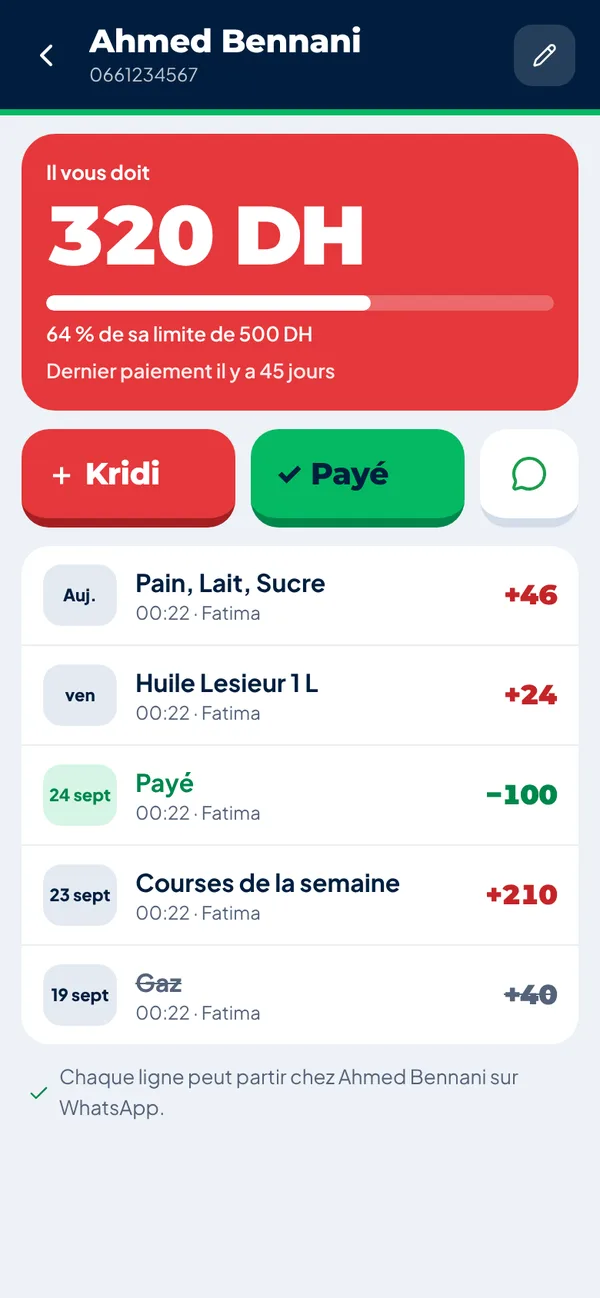
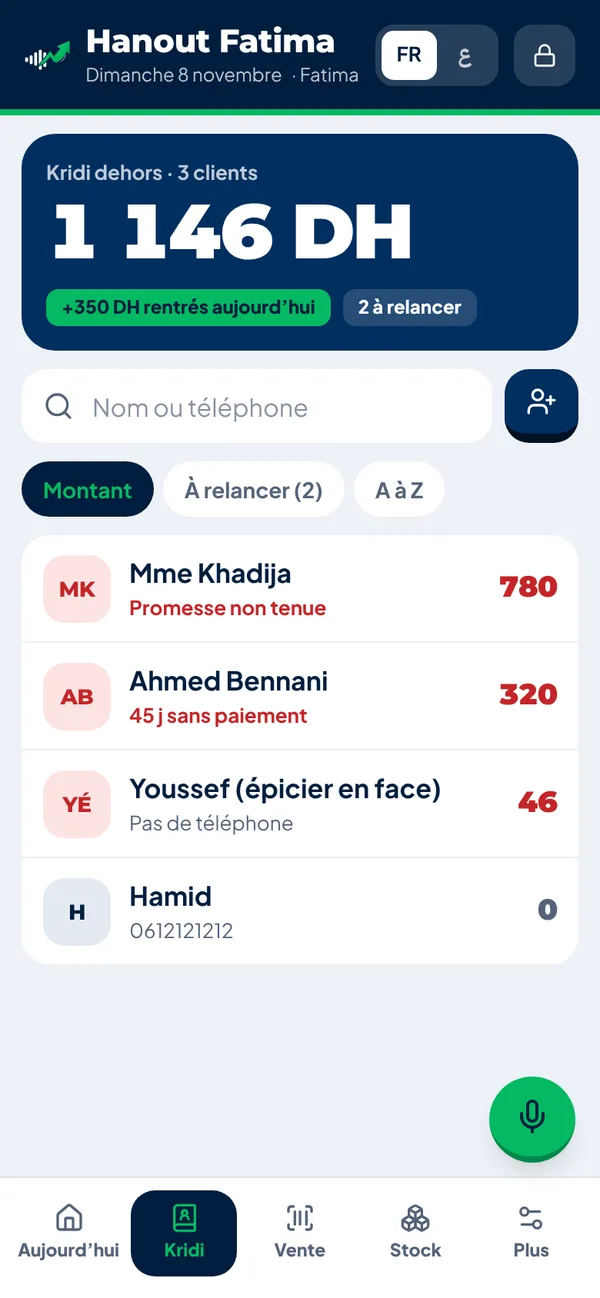
The credit book. No notebook, no awkwardness.
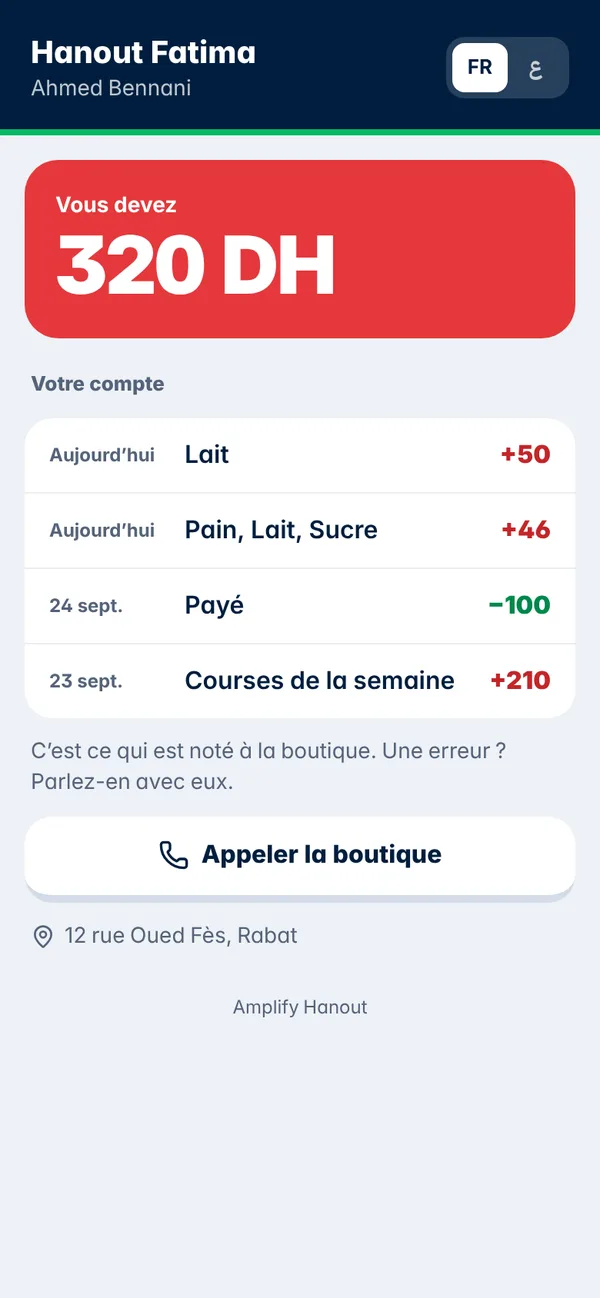
The client takes, you note it in two taps. When it's time to ask, it isn't you being awkward: it's a polite message with their account in detail. They see what they owe, no argument.
320DHAhmed
+200 DH paid back today
One account per client
What they took, what they paid, the total. Every line with the date and who wrote it.
The WhatsApp reminder
A polite message, ready to send, in their language. They open their account from the link, no app needed.
The promise to pay
“I'll pay on Saturday”: noted. If Saturday passes without payment, the client moves up with “Promise not kept”.
A limit per client
Past your limit, the app warns you before you give more.
To remind
Those who haven't paid for a long time, at the top of the list.
Nothing gets erased
A mistake is fixed with a new line, the old one stays visible. No dispute.

At the client's
The reminder arrives. No awkwardness.
How much money is sleeping in your book?
Do the maths with your own numbers. Nothing is sent, everything stays on your phone.
Credit outstanding, in your book
10 000 DH
Of which money sleeping for more than a month
2 000 DH
With Amplify, these clients are at the top of the “To remind” list, with a reminder ready to go on WhatsApp.
Sum: clients on credit × what a client owes, then the share who no longer pay. How many of them pay after a reminder is up to them: we don't promise a figure.
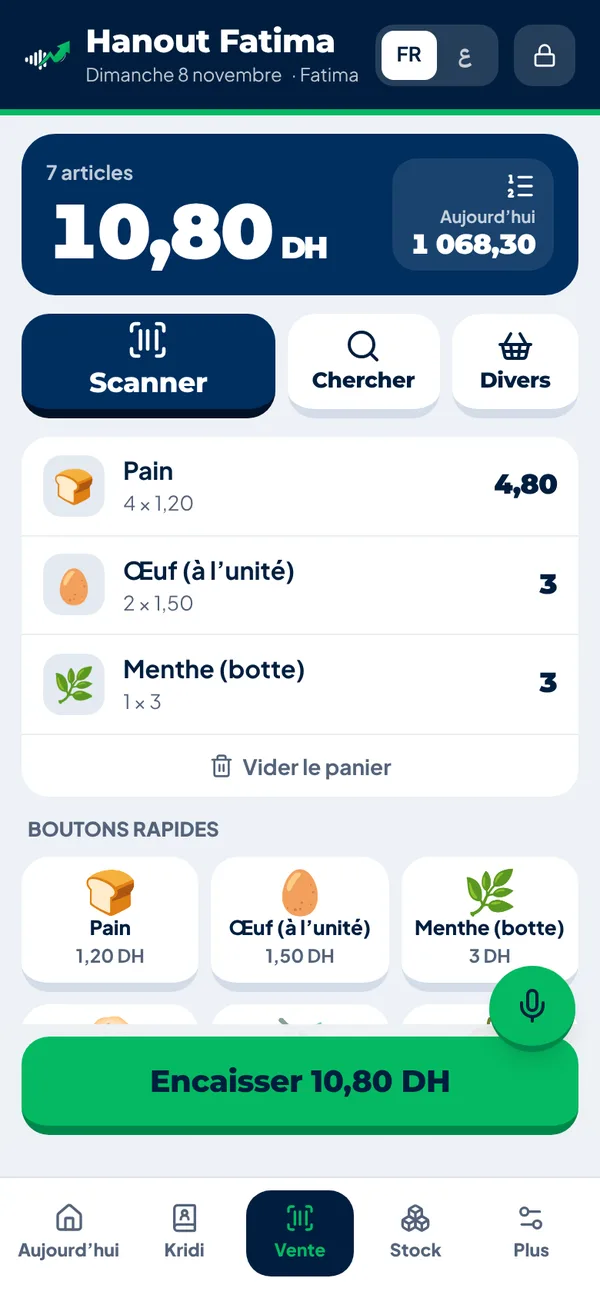
The till. In your hand.
No computer, no counter to rebuild. Scan with the phone, or tap the bread and eggs. The change is worked out, the sale is written down.
Scan with the phone
The camera reads the barcode. A bluetooth scanner works too.
Quick buttons
Bread, eggs, mint: whatever has no barcode, in one tap.
By weight, and the change
Olives by the kilo, the change worked out.
Sold on credit
The basket goes on the client's account in one tap.
Paper ticket or WhatsApp
A small bluetooth printer, or the ticket on their phone.
Say it
“Three breads and a milk for Ahmed, on credit.” In Darija or French, the app fills it in.

Delivery
The delivery comes. The stock follows.
Stock and suppliers. No more surprises.
The delivery man comes, you photograph his note. Stock goes up, so does what you owe the supplier, and you see what's about to expire before the client does.
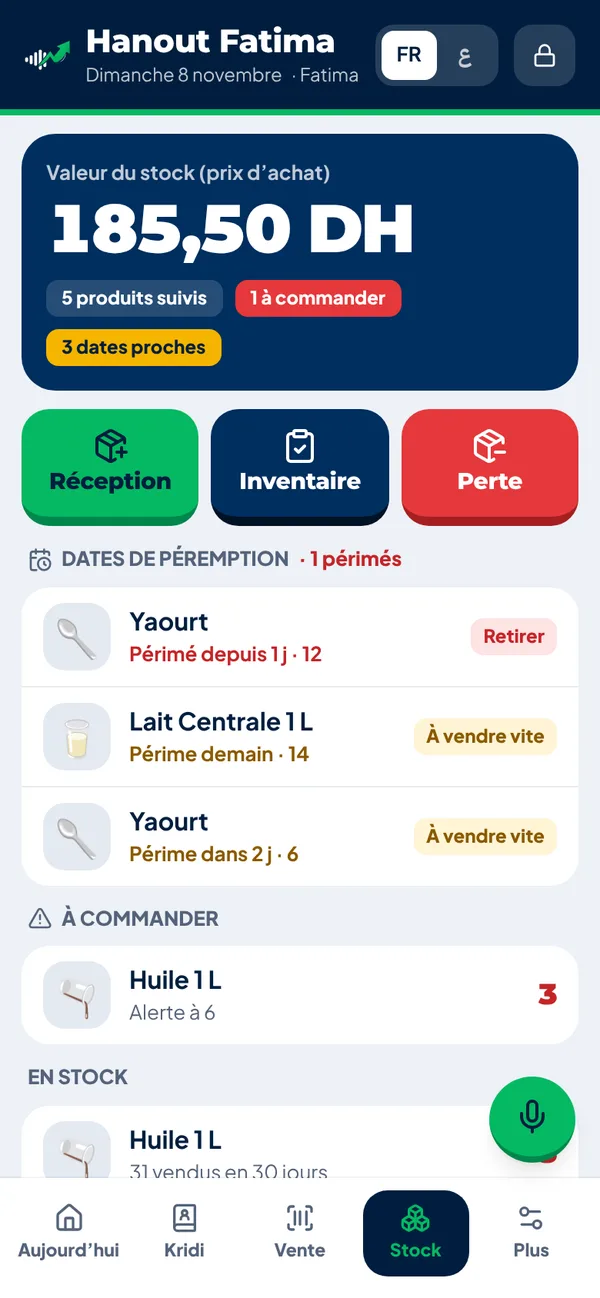
The delivery on photo
Photograph the delivery note: products and quantities fill themselves in.
Expiry dates
“Sell quickly”, then “expired”: before the client finds it.
To order
Below your threshold, the product moves up, with what sells in 30 days.
Stock counts and losses
Count, note what's broken and expired. The gap is visible.
What you owe
Each supplier, their deliveries and your payments. The right total.
Order on WhatsApp
The order list goes to the supplier in one message.

20:30
The order goes to the next street.
The neighbourhood orders. From their phone.
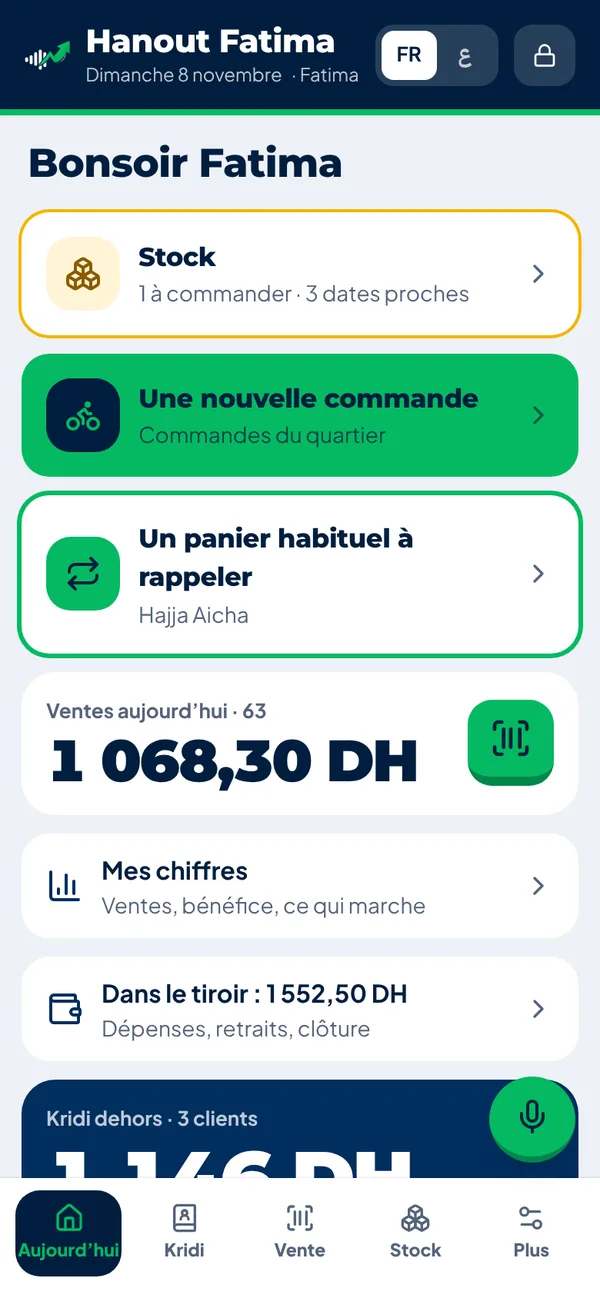
Your shop has its own page, with your products and prices. The neighbour chooses, says whether they'll come by or need delivery, and sends. Your phone rings.
- 1The neighbour orders from the link or the QR on the door.
- 2You accept: they get a WhatsApp.
- 3It's ready: delivered by your boy, or they come and get it.
- 4Charged in one tap, like a sale.
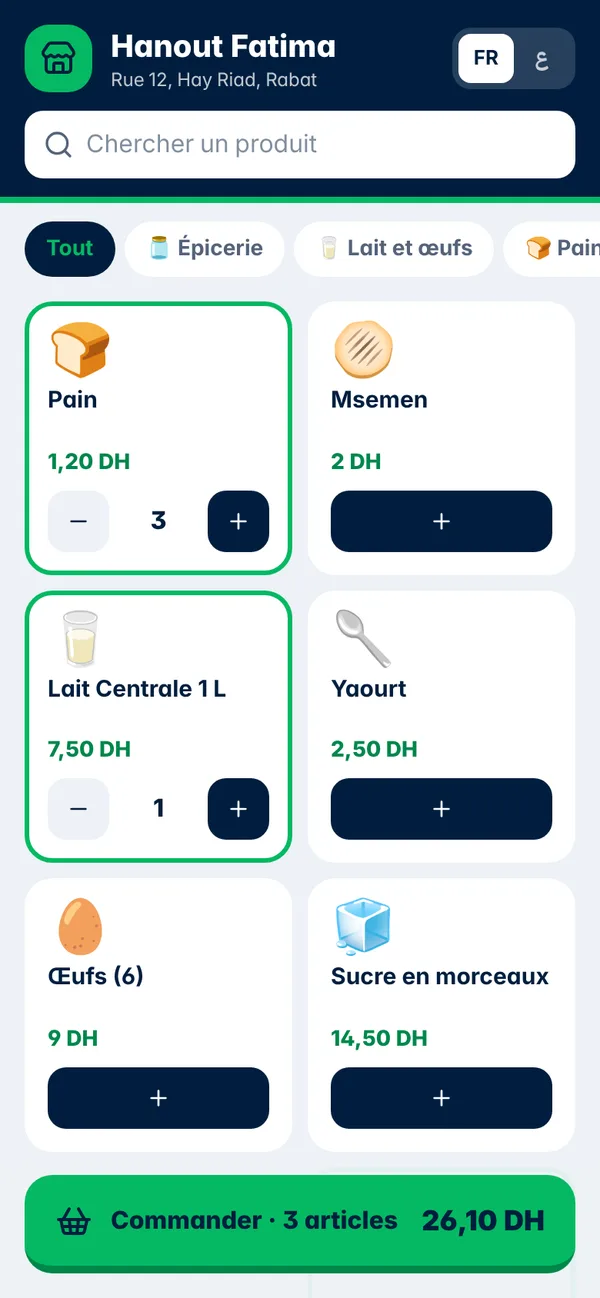
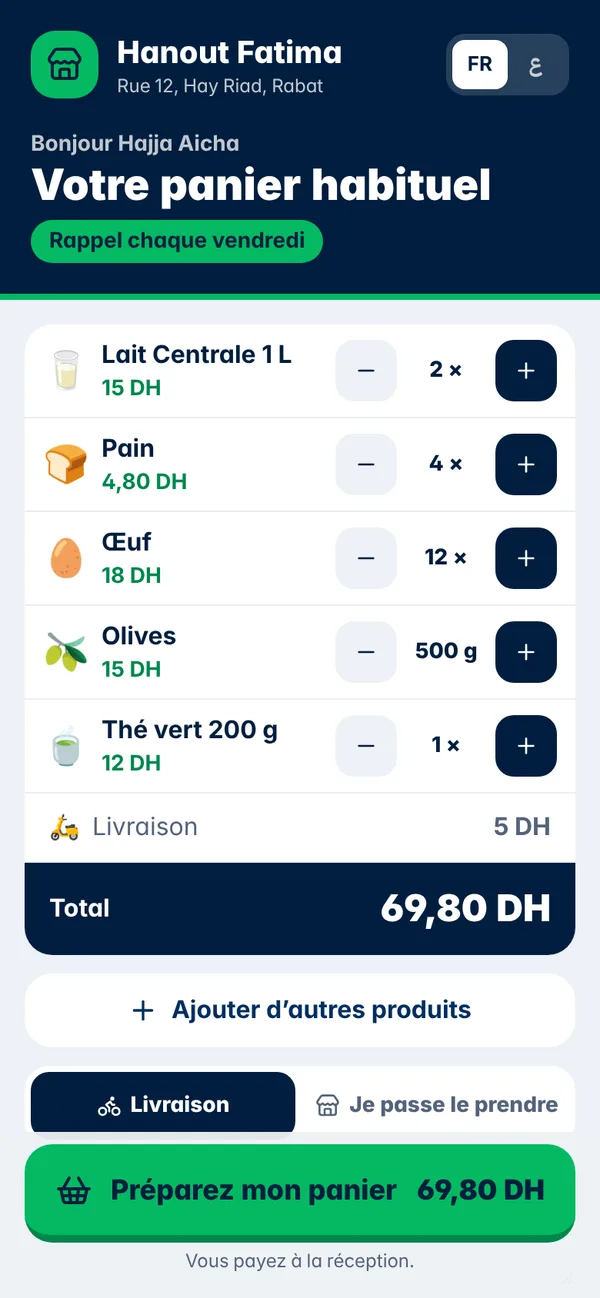
The usual basket.
Hajja Aicha buys the same things every Friday: bread, milk, eggs, sugar, tea, mint. She keeps her order as her usual basket. On Friday you send her a reminder in one tap, and she orders again in one tap. At the day's prices.
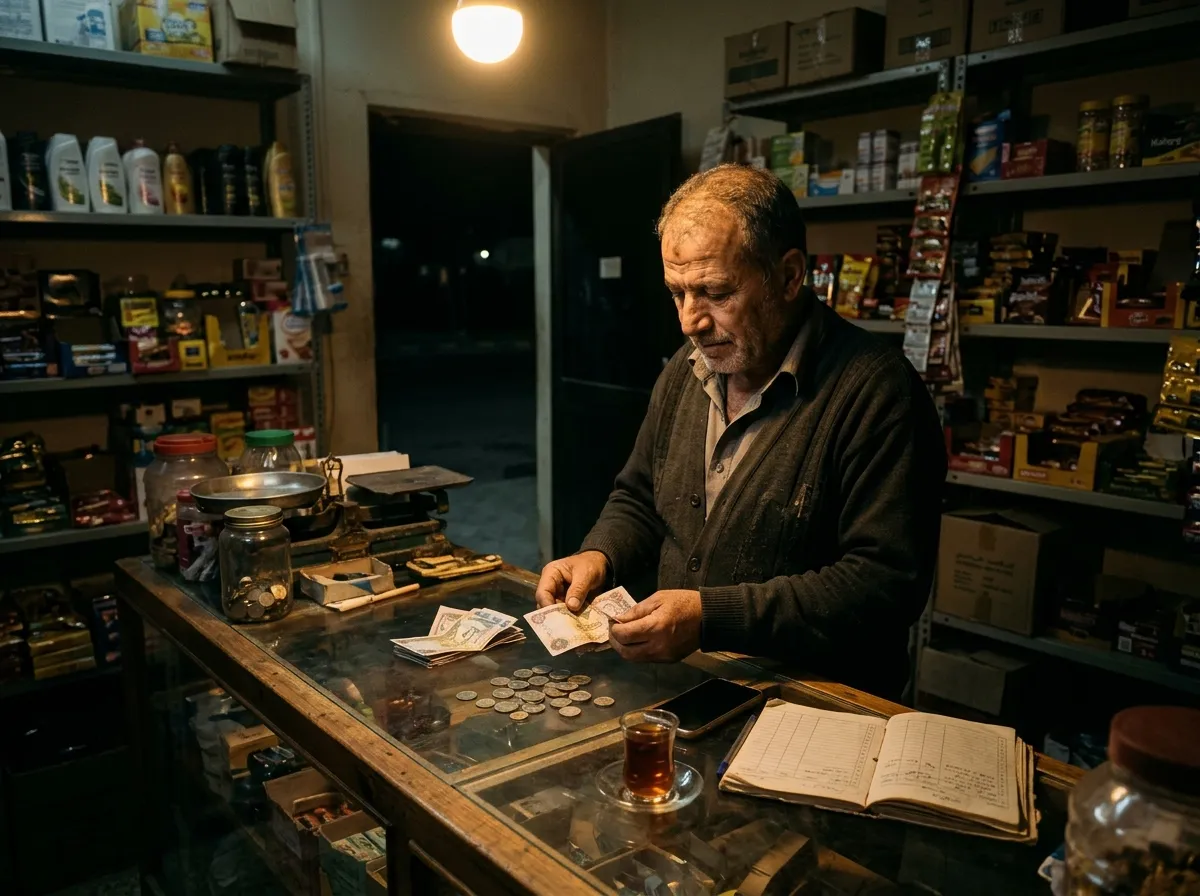
23:00
Till counted. Day done.
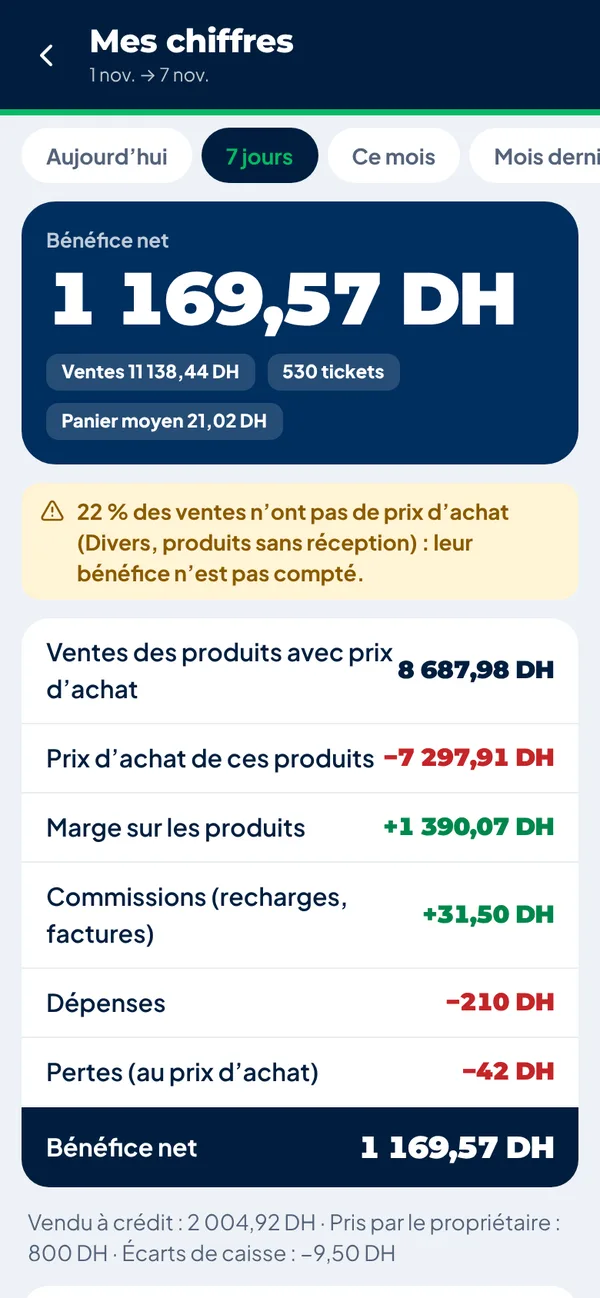
In the evening, your figures. To the dirham.
What you sold, what the credit book brought back, what you spent. And above all: what you really earned.
The day's till
Sales, credit paid back, top-ups, expenses and withdrawals.
Counted close
You count the drawer, the gap is noted. You keep the float.
My figures
Profit, what sells, the busy hours and days.
The team
Everyone has their own code. The seller doesn't see the totals unless you want them to.
Your shop stays yours
Your suppliers, your prices, your way of working. We don't sell you any goods.
Your clients stay yours
No marketplace: your page shows your shop, never a competitor.
No commitment
Stop whenever you want, and keep your accounts.
Pricing. Pick what you need.
Prices per month, excl. VAT. 14 days free, no commitment.
Credit only
99
DH excl. VAT / month
The kridi book, the WhatsApp reminder and the limit per client.
Try 14 days freeCredit and till
149
DH excl. VAT / month
Plus the till: sales, change, ticket and end-of-day closing.
Try 14 days freeMy whole shop
199
DH excl. VAT / month
Plus stock, suppliers, top-ups, the team and neighbourhood orders.
Try 14 days free- 14 days free
- No commitment
- Pressing, Garage and Hanout: setup 490 DH excl. VAT, free with a yearly plan.
Frequently asked questions
-
Not to write things down: credit and sales are noted without internet, and everything is sent as soon as the connection is back. WhatsApp messages and neighbourhood orders do need internet.
-
Your phone. Nothing else to buy. A small bluetooth printer if you want paper tickets, that's up to you.
-
Yes. Arabic first, and French. Everyone in the team picks their language. Messages to clients go out in theirs.
-
No. They get a link on WhatsApp and see their account, their ticket or the shop. Nothing to install, nothing to create.
-
No. You keep your suppliers, your prices and your clients. Amplify never makes you buy anything from anyone.
-
Your accounts aren't stored in the phone. Link a new phone and everything is there.
-
No. You choose: the credit book alone, or more. Add a module whenever you like.
-
We do. We come to the shop, the common products are already in, and we show you everything on your phone.
-
No commitment: stop whenever you want. You can export your accounts.
See it on your phone. In 10 minutes.
Write to us on WhatsApp. We come to the shop, show you the app with a demo shop, and you choose what you want to use.